
Behaviour and Wellbeing Support
At Mundesley Infant School, we want every child to feel safe, happy, valued and ready to learn.
We recognise that young children are still developing the skills they need to understand their emotions, communicate their needs and manage their behaviour. We therefore see behaviour as an important part of learning and development.
Our approach is built around strong relationships, clear and consistent expectations and compassionate support. When children experience difficulties, we work to understand what may be behind their behaviour and help them develop the skills they need to make positive choices.
Our Approach to Behaviour
We believe that behaviour is communication. Sometimes children show us through their behaviour that they are worried, overwhelmed, frustrated, tired or finding something difficult.
Our adults respond calmly and consistently, looking beyond the behaviour to consider what the child may be communicating. We help children to recognise and name their feelings, understand what has happened and learn positive ways to respond.
This does not mean that all behaviour is acceptable. Children need clear boundaries and adults who help them understand the impact of their choices. Our approach combines warmth and understanding with clear, consistent expectations.
Our School Expectations
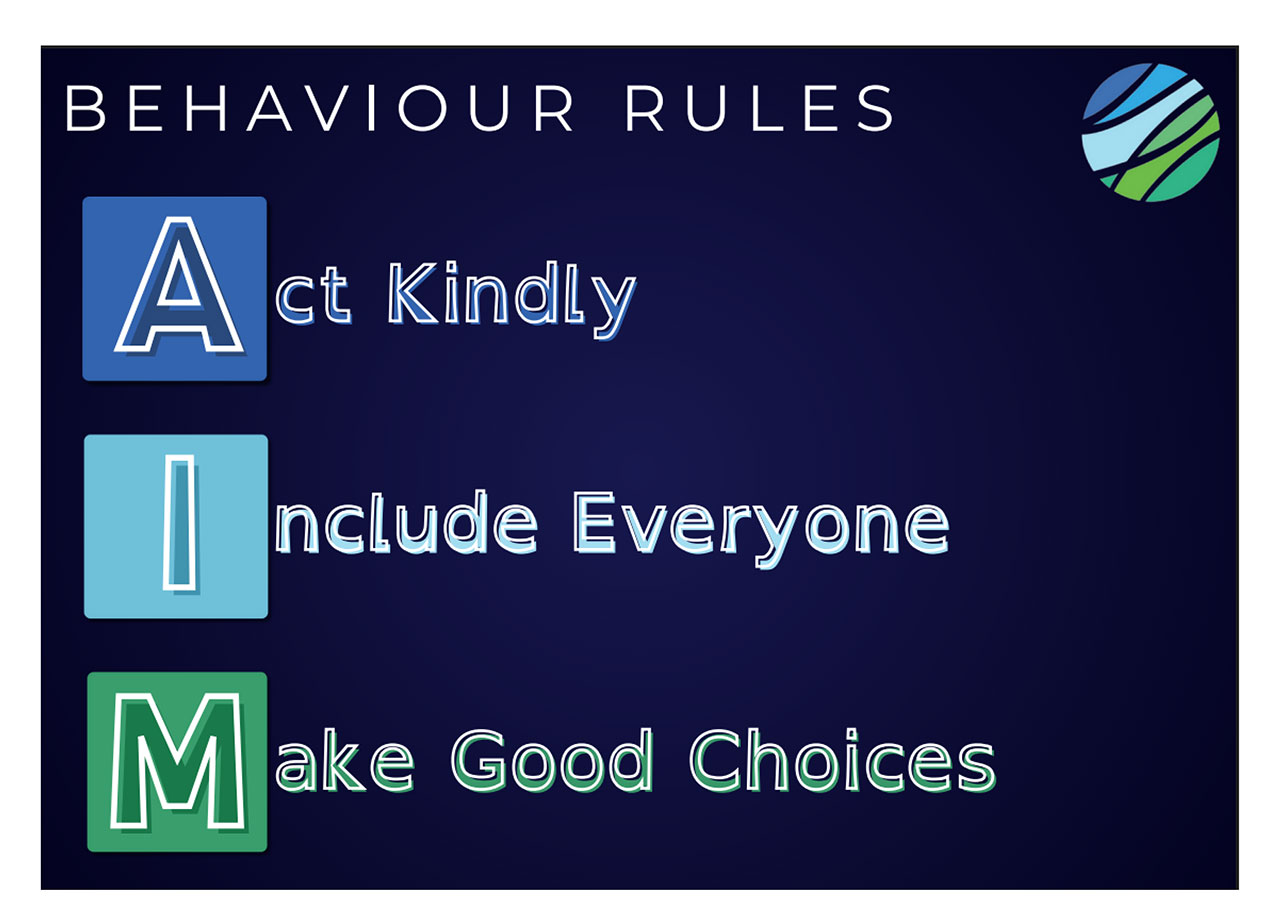
Across school, our children are encouraged to follow three simple AIM Rules:
Act Kindly
Include Everyone
Make Good Choices
These expectations are reinforced throughout lessons, playtimes and everyday school life.
They work alongside our Core Connections and FOCUS Five, helping children develop kindness, responsibility, independence, collaboration and positive attitudes to learning.
We notice and celebrate children when they make positive choices, show kindness, persevere with something difficult or contribute positively to our school community.
Supporting Emotional Wellbeing
Big feelings can sometimes be difficult for young children to manage independently.
When a child becomes upset, frustrated or overwhelmed, our first priority is to help them feel safe and calm. Adults use co-regulation, which means providing a calm and reassuring presence and helping the child gradually regain control of their emotions.
Depending on the child, this might include:
- calm reassurance and simple language;
- time and space to settle;
- movement or sensory breaks;
- breathing or grounding activities;
- a quieter environment;
- helping the child identify and talk about their feelings.
Over time, these experiences help children develop their own strategies for managing emotions and becoming increasingly independent in regulating themselves.
When Things Go Wrong
Mistakes and disagreements are a normal part of growing up. What matters is how we help children learn from them.
Once a child is calm, adults may use a restorative conversation to help them think about:
- what happened;
- how they were feeling;
- who may have been affected;
- what could be done to make things right; and
- what might help them make a different choice next time.
Our focus is on repairing relationships rather than placing blame. We want children to understand that making a mistake does not define them and that relationships can be rebuilt.
Consequences
Where a consequence is needed, it is used to help a child learn, reflect or keep themselves and others safe.
Consequences are always considered carefully and should be fair, proportionate and appropriate for the individual child.
They may include opportunities to reflect with an adult, practise a more positive behaviour, repair something that has been affected by their actions or temporarily change an activity or arrangement to keep everyone safe.
Our aim is always to help children understand the impact of their actions and develop better strategies for the future.
Individual Support
Every child is different, and some children may need additional help with behaviour, emotions or regulation.
If we become concerned about a child's behaviour or wellbeing, we will involve parents and carers at an early stage so that we can work together to understand what is happening and agree appropriate support.
This may include additional strategies within school, a more individualised support plan or, where appropriate and with parental involvement, advice from external professionals and services.
We believe that the best outcomes are achieved when children, families and school work together.
Working With Families
We value our positive partnerships with parents and carers and we value your knowledge and involvement.
If you are worried about your child's behaviour, emotional wellbeing or something they are experiencing in school, please speak to your child's class teacher in the first instance. We can then work with you to understand the situation and consider what support may be helpful.
Likewise, if we notice a pattern of behaviour or feel that your child may benefit from additional support, we will talk with you rather than waiting for concerns to become more significant.
Our shared aim is for every child to feel secure, understood and able to thrive.
Positive Behaviour and Emotional Support Policy
AIM Federation’s Positive Behaviour and Emotional Support Policy, which also incorporates our Anti-Bullying Policy, provides further information about our approach, procedures and the support available to children, can be found on the AIM Federation website.
Our Values
- Respect for others, their property and the environment
- Honesty, trust and fairness
- Tolerance and compassion towards others
- Self respect and self discipline
There are both entitlements and responsibilities on the part of those involved in securing effective behaviours for learning in school.
Rupture Repair Cycle
As human beings, we often suffer from a fear of getting things ‘wrong’, messing up, making mistakes. We strive for perfection, wanting to be a model colleague, the best practitioner, the perfect parent. And nowhere is this truer than in our relationships: we so desperately want to get it right for ourselves and those we care about. And yet, the reality is that relationships are a messy business where mistakes are inevitable.
The good news is that research shows that in any relationship the ‘mistakes’ – the moments of disconnection – matter far less than how and whether we can find our way back into connection with one another. In fact, when skilfully done, such repairs to the relationship actually serve to strengthen the bonds of the attachment. It is repairs that build trust.
